Unlocking the Stars: Why Antimatter Could Power Our Interstellar Future
Chemical rockets have been pivotal in our space exploration endeavors, yet they fall short for interstellar travel. Antimatter offers an exciting alternative, potentially providing the vast amounts of energy needed to reach nearby stars and unlock the mysteries of the universe.
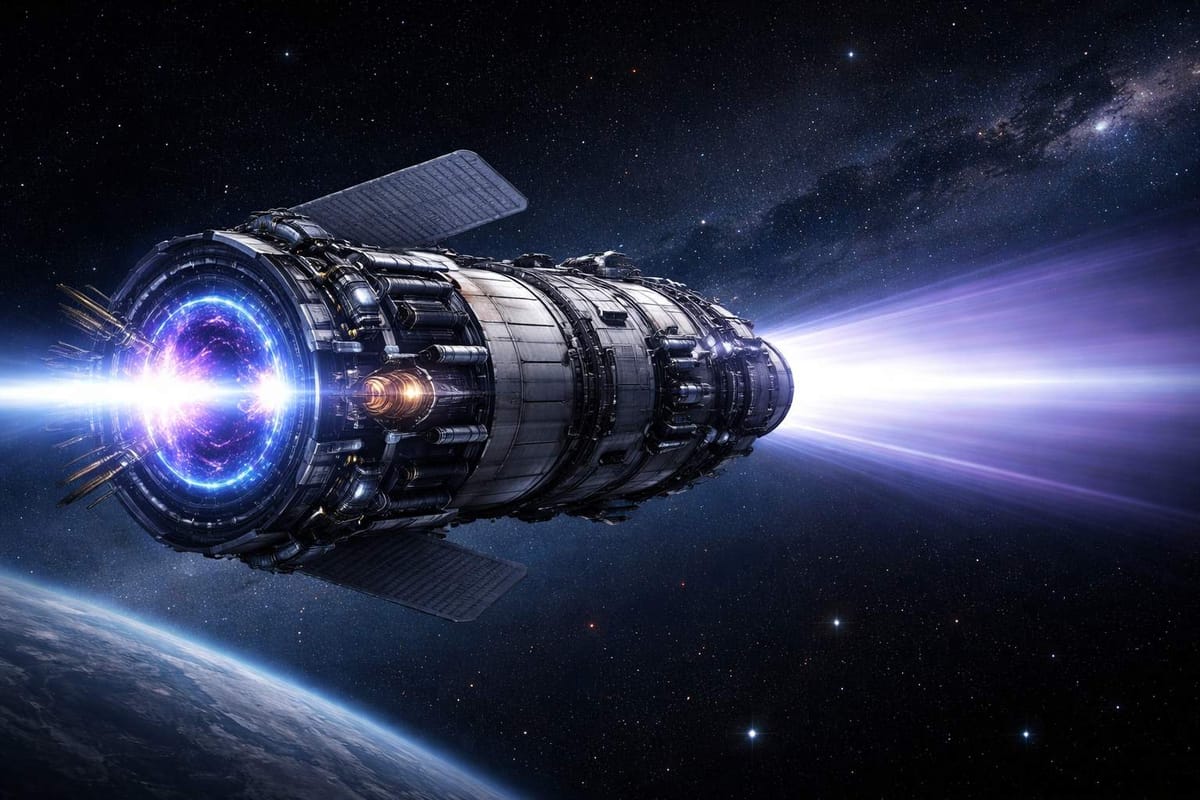
When we think about the incredible journeys humanity has made into the cosmos—from Apollo missions landing on the moon to the ambitious SpaceX Starship aiming for Mars—it's clear that chemical rockets have propelled our exploration so far. But, here’s the thing: if we want to venture beyond our solar system to neighboring stars, we need a game-changer, and that’s where the concept of antimatter comes into play.
The Limitations of Chemical Rockets
Imagine you’re in a car on a road trip. Your current vehicle might get you from city to city, but if someone told you that you could go much faster and farther with a rocket-powered spaceship, you’d probably see the appeal. Chemical rockets, which burn fuel like gasoline in a car, provide the thrust needed to escape Earth’s atmosphere, but they have their limits. While SpaceX’s Starship can carry impressive cargo into orbit or send supplies on missions throughout our solar system, it simply isn’t built to travel at high speeds necessary for interstellar trips—let’s say, a thrilling 30% of the speed of light.
What is Antimatter?
Here’s where antimatter enters the scene—a mysterious substance that holds the keys to a realm of possibilities. To put it simply, you can think of antimatter as the opposite of the matter that makes up everything we see around us. Just as every coin has two sides, every particle in our universe can have an antimatter counterpart that carries the same mass but has an opposite charge. When matter and antimatter collide, they annihilate each other, releasing an astonishing amount of energy—much more than traditional fuels can provide.
The Energy of Antimatter: A Comparatively Small Amount, Large Potential
Picture this: if we could harness just a tiny amount of antimatter—the size of a grain of salt—we could potentially generate as much energy as is released by a nuclear bomb! That’s a staggering comparison that helps illustrate how potent antimatter could be for space travel. This energy density is why scientists are advocating for an 'antimatter Manhattan Project,' aiming for a focused research effort to unlock the secrets of antimatter, much like the original Manhattan Project aimed to harness nuclear energy.
The Road Ahead: Challenges and Possibilities
However, we're not quite ready to pack our bags for a journey to Alpha Centauri. Producing and storing antimatter is an incredibly challenging task. Currently, creating it in particle accelerators costs more than millions of dollars per milligram. It's a tough nut to crack, but the possibilities are infinitely exciting.
A Bright Future in Space Exploration
The dream of interstellar travel may seem distant, but with antimatter as a potential power source, the stars are inching closer. With the right investment and research—much like we saw during the race for the atom—we could open up a new chapter of exploration beyond our planet. Just imagine: one day we might travel to other star systems, meet alien worlds, and expand our understanding of the universe. Now, that’s a journey worth pursuing!
More information: Sawsan Ammar Omira et al, Future of Antimatter Production, Storage, Control, and Annihilation Applications in Propulsion Technologies, International Journal of Thermofluids (2024). DOI: 10.1016/j.ijft.2024.101012