Google's Innovative Approach to Data Center Energy: Harnessing Fossil Fuels with Carbon Capture
As the demand for data centers burgeons across the United States, concerns regarding their energy consumption and the associated greenhouse gas emissions are emerging. Data centers, particularly those serving artificial intelligence operations, require significant power, ranging from a few megawatts for smaller facilities to over 100 megawatts for hyperscale operations. In contrast, a typical large natural gas power plant in the U.S. produces less than 1,000 megawatts of energy.
When these data centers are powered by fossil fuels, they can substantially contribute to climate-warming emissions unless the power plants implement effective measures to capture and store greenhouse gases.
In a strategic move, Google has entered into a novel corporate power purchase agreement to facilitate the construction of a natural gas power plant in Illinois, which is designed to incorporate carbon capture and storage (CCS) technology.
Understanding Carbon Capture and Storage
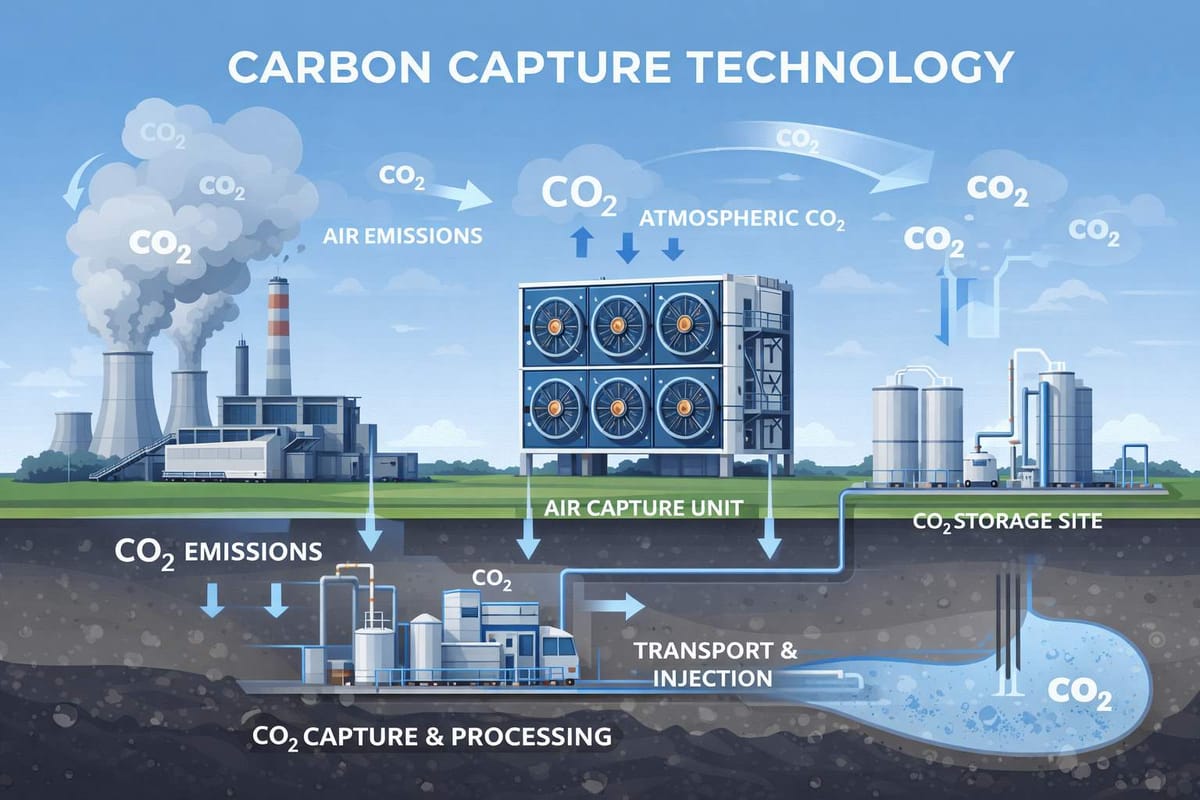
Carbon capture and storage is a method aimed at reducing carbon dioxide emissions produced by combustion processes in power generation or industrial activities. These emissions are then transported and securely injected underground into geological formations.
The accumulation of carbon dioxide in the atmosphere creates a significant greenhouse effect, leading to climate issues such as rising global temperatures, increased heatwaves, and intensified weather patterns. Carbon capture technology aims to mitigate this by ensuring that carbon dioxide is captured before it can enter the atmosphere.
The captured carbon dioxide can be transported in a supercritical state or dissolved in a liquid form and is ultimately injected into deep underground reservoirs where it can be contained permanently for long-term storage.
Storage Options for Carbon Dioxide
Several viable options exist for underground carbon dioxide storage:
- Depleted Reservoirs: Old oil and natural gas fields are often used, as they have been effective at holding hydrocarbons for millions of years and are already well-mapped.
- Enhanced Oil and Gas Recovery: Injecting carbon dioxide into active oil and gas fields can help extract additional fossil fuels while also securing some of the carbon underground.
- Volcanic Basalt and Carbonate Formations: Such geological formations can chemically interact with carbon dioxide, converting it into solid minerals.
- Deep Saline Aquifers: Widely distributed throughout the United States, these aquifers possess large capacities for carbon storage, including formations of sandstone or limestone that cannot be utilized for drinking water.
Google's initiative primarily focuses on utilizing deep saline aquifers for its carbon storage capabilities.
Google's Carbon Capture Initiative
The new 400-megawatt natural gas plant, developed in partnership with Broadwing Energy, aims to capture approximately 90% of its carbon dioxide emissions for underground storage in the Mount Simon sandstone formation, a deep saline aquifer that spans significant regions of Illinois and surrounding states.
This sandstone layer is uniquely suited for carbon storage, provided it achieves depths of at least 800 meters to maintain carbon dioxide in its supercritical state. An impermeable layer of Eau Claire shale above the Mount Simon formation will help ensure the captured carbon remains securely stored.
The estimated capacity for carbon dioxide storage in the Mount Simon formation ranges from 27 to 109 gigatons, highlighting its potential for significantly mitigating emissions.
The site has historical significance, as Archer Daniels Midland has been safely injecting carbon dioxide there since 2012 as part of an earlier large-scale CCS demonstration from its corn processing facilities.
CCS Challenges and Importance
Despite its promise, the carbon capture technology faces challenges. Incidents of pipeline leaks have raised concerns about safety and efficacy, leading regulatory bodies to mandate improvements in monitoring processes.
As the proliferation of data centers continues, the need for substantial increases in energy generation capacity becomes apparent. The artificial intelligence industry predicts a requirement of 100 gigawatts of new power each year, which is double the current pace. Many energy authorities emphasize that the implementation of carbon capture and storage will be crucial for addressing climate change while meeting rising energy demands.